



 Service Times
 Worship Calendar
 Weekday Scripture Readings
 Special Services Coming Up
Weekday Feast-days
Special Services Coming Up
Weekday Feast-days
 All Age Services
 Online Worship
 Walsingham Cell
 Ministry of Healing
 About our Worship
 Servers & Sacristans
 Vision & Priorities
About the Parish
Vision & Priorities
About the Parish
 Clergy
 Building a Generous Church
 Outward Giving
Pastoral Team
Outward Giving
Pastoral Team
 Initial Enquiries Evenings
 Baptisms & Confirmation
 Weddings & Blessings
 House Group, Courses
 Caring for our Heritage
 St Matthew's Trust
Rest Eternal
St Matthew's Trust
Rest Eternal
 Photo Gallery
 Music at St Matthew's
The Choir
Music at St Matthew's
The Choir
 Director of Music
Current Music List
Director of Music
Current Music List
 Organs & Piano
 Friends of the Music
 Concerts & Recitals
Forthcoming Musical Events
Commissions
Concerts & Recitals
Forthcoming Musical Events
Commissions
 The Carillon
 Recordings
Community Carol Singing
Recordings
Community Carol Singing
 100+ Club
 Parish News
Fundraising
Parish News
Fundraising
 Weekly Notices
 St Matthew's Mail
 St Matthew's Ladies Group
 Christian Aid Week
 2026 Summer Fete
 2025 HCT Ride & Stride
 2025 Christmas Fayre
 St Matthew's Minis
 Uniformed Organisations
 A Spiritual & Cultural Hub
The Memorial Chapel
Madonna & Child
A Spiritual & Cultural Hub
The Memorial Chapel
Madonna & Child
 The Crucifixion
 St Matthew
Stations of the Cross
The Risen Christ
The Piper Painting
St Matthew
Stations of the Cross
The Risen Christ
The Piper Painting
 A Brief History
 How to find us
 Facilities for Hire
 Plan & Virtual Tour
 Floodlighting
 The C of E Safeguarding
 Contact Information
News & Events - Parish News
August Pastoral Letter from the Vicar
Posted on Saturday 1 August 2026 at 7:00am
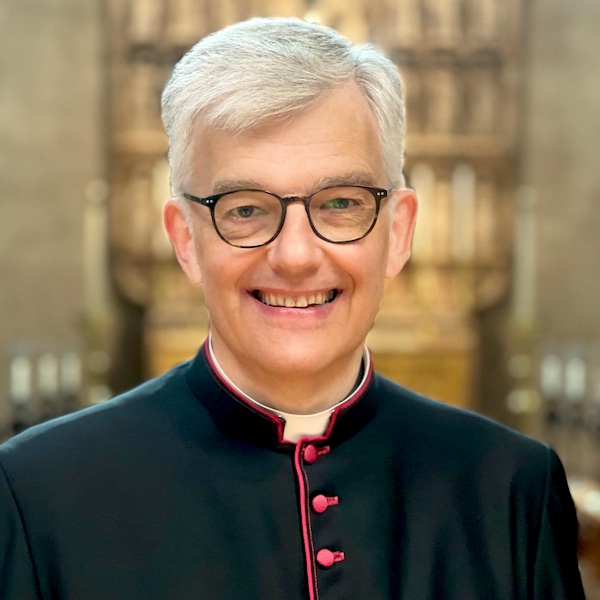
Dear Friends,
There is something rather different about August.
The pace changes. Schools are closed. Parliament disappears into recess.
Traffic mysteriously becomes lighter – until one reaches the M5 somewhere
near Bristol, when it appears everyone in Britain has had exactly the same
idea. Parish diaries, usually full to overflowing, suddenly acquire the
occasional blank page. Even the gardens, usually demanding constant
attention by this stage of the summer, seem to have admitted temporary
defeat in the face of this year's prolonged dry spell. It is a month that reminds
us that rest is not an indulgence but a gift.
In the creation story God himself rests on the seventh day – not because he
was tired, but because he delighted in what he had made. If God himself
builds rest into the rhythm of creation, perhaps we should not feel too guilty
about sitting in the garden with a cup of tea, listening to the birds, or
occasionally finishing an entire newspaper or jigsaw before lunch.
This year, many of us have also enjoyed the drama and heartbreak of the
World Cup. England’s journey to the semi-finals captured the imagination of
the country once again. Like so many tournaments before it, there were
moments of exhilaration, moments of nail-biting tension and, ultimately, the
disappointment of defeat at the final hurdle. We have become rather practised
at saying, “Maybe next time!” Yet there was much to admire: commitment,
teamwork, resilience and the determination to keep going even when the odds
were against them.
Sport has an extraordinary ability to unite complete strangers. For ninety
minutes – or sometimes rather longer – we discover ourselves cheering,
hoping and occasionally hiding behind the sofa in unison. It reminds us that
we are made for community, that shared joys and shared disappointments are
part of being human.
The same is true of the Church, although I am pleased to report that the
outcome of the Parish Mass is generally rather more predictable than a
penalty shoot-out.
While we may have been following football, the wider world has continued to
remind us how fragile peace remains. Wars continue, humanitarian crises fill
our television screens, and many families face anxieties that are hidden from public view: illness, bereavement, financial pressures or uncertainty about
the future. Such realities cannot simply be switched off because it is
summer.
Yet neither can the hope that lies at the heart of the Christian faith.
The Church has always understood that true peace is not simply the
absence of conflict. It is the presence of Christ. It is perfectly possible to be
surrounded by noise and uncertainty, yet possess a quiet confidence that
God has not abandoned his world. Equally, one can be sitting on the most
beautiful beach imaginable and still carry an anxious heart. The peace
Christ gives begins within us and gradually transforms the way we see
everything else.
Perhaps that is one reason why Jesus so often withdrew to quiet places to
pray. He knew that life could not be lived at full speed all the time. Silence,
prayer and rest are not interruptions to the Christian life; they are part of it.
Here at St Matthew’s, August is traditionally a slightly gentler month. Choral
Evensong takes a summer pause while the choir enjoys a well-earned
break, weekday worship continues faithfully, and we gather as always
around the altar week by week. Some of us will be travelling; others will be
welcoming visitors; many will simply enjoy familiar routines at a rather slower
pace. Whatever your plans, I hope you will find moments to recognise
God’s presence in ordinary things: a conversation with a friend, an evening
walk, the laughter of children, the beauty of creation, or simply the gift of
having nowhere urgent to be.
During August I shall also be taking a short period of annual leave. I am
deeply grateful to Fr Nicholas Gandy for covering the Sunday and weekday
Masses, and to the many members of our parish family whose quiet
faithfulness ensures that the life of St Matthew's continues day by day.
Churches, rather like gardens, flourish because many different people
lovingly tend them.
As we move through August we also look towards the Feast of the
Assumption of the Blessed Virgin Mary, which this year falls on a Sunday.
Mary’s life reminds us that the Christian journey is always one of trust. She
did not know where God’s call would lead, but she entrusted herself to him
completely. In the end, her faithfulness was crowned with glory – not only
as her own reward, but as a promise of what God intends for all who belong
to Christ.
That is a hopeful thought with which to enjoy the closing weeks of
summer.
Whether your August is filled with holidays, grandchildren, gardening,
decorating, catching up with neglected jobs – or simply shielding from, or
wondering where on earth the sunshine has gone – I pray that you may
know something of God’s peace, his refreshment and his joy.
Your sincere friend and parish priest,
Fr Nicholas
2026 Ride+Stride
Coming soon…
Posted on Monday 27 July 2026 at 3:17pm

In fact, on Saturday 12 September! It’s the day when churches and
chapels around the county are throwing their doors open to visitors. It
would be great for members of our congregation to take advantage of the
day – and do it on behalf of St Matthew’s so you can raise some cash for
the church at the same time, as well as, very importantly, for the places of
worship that desperately need maintenance, more than their congregations
can cover.
The county Historic Churches Trust is a body of voluntary organisations
that raise money for the restoration and maintenance of historic churches
and chapels, supported by the national Churches Trust. In 2012 St
Matthew’s received a grant of £10,000 for our own major repair works.
Ride+Stride is an annual fun event run by the Trust, and it’s been taking
place each year on the second Saturday in September across most of the
country since it began in Suffolk in 1981. Last year, with your help, we at St
Matthew’s raised £285, half of which came back to St Matthew’s – funds
raised are divided equally between the Trust and the individually sponsored
church.
Don’t worry, you don’t have to walk every step – it’s ok to drive (or go by
bus, especially handy if you have a bus pass!) and just enjoy walking
around the churches.
If you don’t have the time for visiting then you can still take part by
sponsoring those in our congregation who hopefully will, or those who sit
and record the visitors who come to us!
So there are three ways you can join in:
❖ You can visit as many or as few as you like of the Northampton / Northamptonshire churches taking part – team up with your friends and enjoy a fun and sociable few hours and see interesting places of worship
that may not normally be open except for services. I will have a list of those
churches and chapels taking part and will give you a sheet which you get
signed at each one you visit.
❖ You can man St Matthew’s (we’ll be open between 10.00am and
2.00pm) to welcome and record others visiting our church – it’s a nice easy
sit-down job for an hour or so (always with someone else).
❖ You can sponsor us with money – please do! Note that we donate ‘en
masse’ for the riders/striders/recorders – all help equally.
Like to help?
Register your interest in visiting, manning or donating with me, either in
person after Sunday Mass, or via the Parish Office letterbox in an envelope
with a note giving your clearly readable name, address and phone number /
email address, and addressed to Dorrie Parker, Ride+Stride (and if
donating, please include it as cash or a cheque payable to NHCT, as it will
save me chasing you later – it makes life SO much easier…!). Please
indicate if you would like to Gift Aid your donation.
Thank you in anticipation!
Dorrie Parker
July Pastoral Letter from the Vicar
Saints, Seasons, and Stoppage Time
Posted on Wednesday 1 July 2026 at 7:00am
July is one of those curious months that seems to exist in two worlds at once.
The summer holidays beckon, school terms draw to a close, gardens burst into
life (and weeds likewise with remarkable enthusiasm), and many of us begin to
think about holidays, lighter evenings, and perhaps the possibility of a little rest.
And, lest anyone should accuse the parish magazine of being entirely detached
from contemporary life, I should also acknowledge that a significant proportion
of the globe will be spending July with one eye on the FIFA World Cup.
Nations will rejoice, despair, celebrate unexpected victories, lament
questionable refereeing decisions, and confidently explain afterwards exactly
how the manager should have done it differently. It is one of the few occasions
when entire countries appear to acquire expert tactical knowledge overnight.
Yet even amid the excitement of competition, the tournament reminds us of
something important: people of every nation, language, and culture share a
common humanity. Christians, of course, would add that we are all members
of one human family, created in the image of God.
Yet the world itself rarely seems to take a holiday. As I write, we continue to
witness conflict, uncertainty, political upheaval, economic pressures, and
growing concern about the care of our planet. The news can sometimes leave
us feeling weary and burdened. It is perhaps no coincidence that one of the
great themes of our All Age Mass this month is Jesus’ invitation: “Come to me,
all you who are weary and carrying heavy burdens, and I will give you rest.”
Those words are not addressed merely to first-century disciples but to twenty-
first-century Christians trying to navigate an increasingly complicated world.
The Church, too, keeps its own calendar, and July is rich in saints whose lives
continue to speak to our own circumstances. On 3 July we celebrate St
Thomas the Apostle. Poor Thomas is forever remembered as ‘Doubting
Thomas’, which seems rather unfair. After all, the other disciples had already
seen the risen Christ before Thomas was asked to believe. Perhaps he is the
patron saint of all who have questions, uncertainties, and moments when faith
feels difficult. Thomas reminds us that honest questions are not the enemy of
faith. Indeed, they may sometimes be the doorway to a deeper faith.
A few days later comes St Benedict, often called the Father of Western
Monasticism and Patron of Europe. Benedict understood that holiness is
usually found not in dramatic gestures but in the faithful keeping of daily
routines: prayer, work, study, hospitality, and community life. In a culture that often values noise and novelty, Benedict gently reminds us that God is
frequently found in the ordinary.
Then comes St Swithun, whose name inevitably raises the annual question:
“Will it rain for forty days?” Northampton weather-forecasting has not, to my
knowledge, yet been entrusted entirely to medieval saints, but his feast does
prompt us to think seriously about our stewardship of creation. Climate
change is no longer a distant possibility but a present reality. Christians
believe that the earth is God’s gift to us, and that caring for it is not a political
fashion but a spiritual responsibility.
Later in the month we celebrate St Mary Magdalene, the first witness to the
resurrection and often described as the ‘Apostle to the Apostles’. She stands
at the empty tomb carrying grief, confusion, and loss, only to hear her name
spoken by the risen Lord. Many people today carry hidden wounds of one
kind or another. Mary Magdalene reminds us that Christ still calls people by
name and still brings healing, hope, and new beginnings.
The Feast of St James the Apostle follows on 25 July. James was a
fisherman before he became a disciple. In an age when many communities
connected with agriculture and fishing face uncertainty and challenge, his
feast invites us to pray for all whose livelihoods depend upon the land and
sea. James also learned, sometimes painfully, that discipleship is not about
seeking the places of honour but about learning the way of service.
Finally, towards the end of the month, we celebrate Martha, Mary, and
Lazarus. Few families in the Gospels feel quite so recognisable. Martha is
busy organising, Mary is listening at the Lord’s feet, Lazarus quietly
occupies the middle ground, and before long someone is having a robust
discussion about priorities. It all feels wonderfully familiar. Yet theirs was a
home marked by friendship, hospitality, learning, faith, and love. Their story
reminds us that Christ is often encountered not only in church but around
dining tables, in conversations, in acts of welcome, and in the ordinary
business of family life.
All of these themes find their place in the life of St Matthew's this month.
Our Summer Fête, the All Age Mass, the Healing Mass, the ministry of
anointing, the Walsingham Cell, and our regular worship all seek, in different
ways, to help us encounter Christ in community.
As schools break up and many begin their summer travels, I encourage you
to make time for rest, for family, for friendship, and for prayer. God himself
rested on the seventh day, and experience suggests that most vicars
eventually discover they are not more indispensable than the Almighty.
May this summer be for you a season of refreshment. May Christ
strengthen your faith when it is tested, deepen your hope when the world
feels uncertain, and fill your heart with the peace that only he can give.
Your sincere friend and parish priest,
Fr Nicholas
The 1895 Walker Organ in St Matthew’s
by Tom Moore, Director of Music
Posted on Sunday 19 April 2026 at 8:40pm
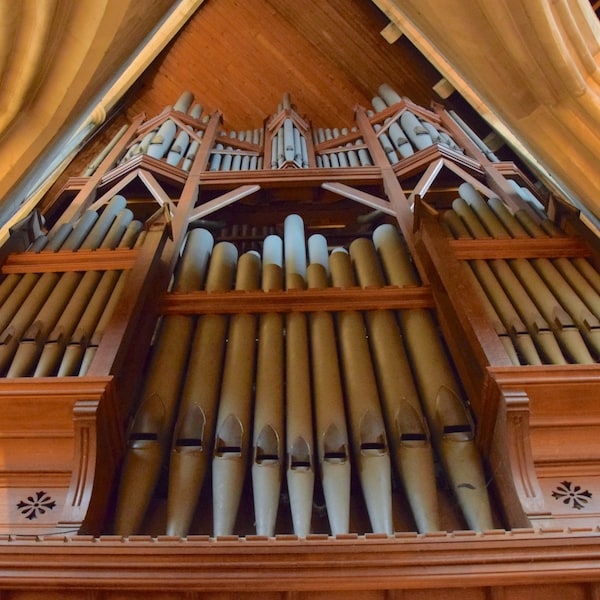
This year marks the 20th anniversary of the rebuilding of the grand Walker
Organ in St Matthew’s.
It is well documented that the instrument, considered a masterpiece of
Walker’s work and of international significance due to its largely original
specification and unaltered pipework, was by the early 2000s starting to
become unreliable and difficult to maintain due to age and component
parts simply having worn out. The organ needed a major rebuild, and the
Vicar and PCC at the time saw fit to invest some £360,000 into its complete renovation. The organ underwent major ‘surgery’ in 2005/2006 and
was ultimately restored, rebuilt and rededicated at the Dedication Festival
in September 2006.
To mark this 20 year milestone, we are planning a number of events and
recitals this year to showcase the organ, and to give those who have an
interest in the instrument an education in how the instrument works, how
the pipes make sound, and to show you around the instrument into parts of
the organ that you never see from your seats in the nave. It is a fascinat-
ing instrument and can very easily be taken for granted each time we come
for services where the organ is in use. We expect to be able to turn it on,
for the organist to sit at it, and for music to come out; but its unbelievably
complicated systems mean that it is a pure wonder that such a thing ever
makes the beautiful sounds we hear and appreciate each week.
The celebration of this organ which St Matthew’s and its people should feel
so rightly proud of will initially take on the form of a series of recitals by organists who have a connection to St Matthew’s, which will take place on
certain Sunday evenings after Choral Evensongs. Later in the year, we
are planning a ‘meet the organ’ event and, at St Matthew-tide, a silent
movie will be presented where the organ will be used to accompany a film
on a big screen. Keep an eye out for dates being released soon.
A reminder that we need your consent
Live-streaming, GDPR and Your Consent
Posted on Monday 16 September 2024 at 11:30am
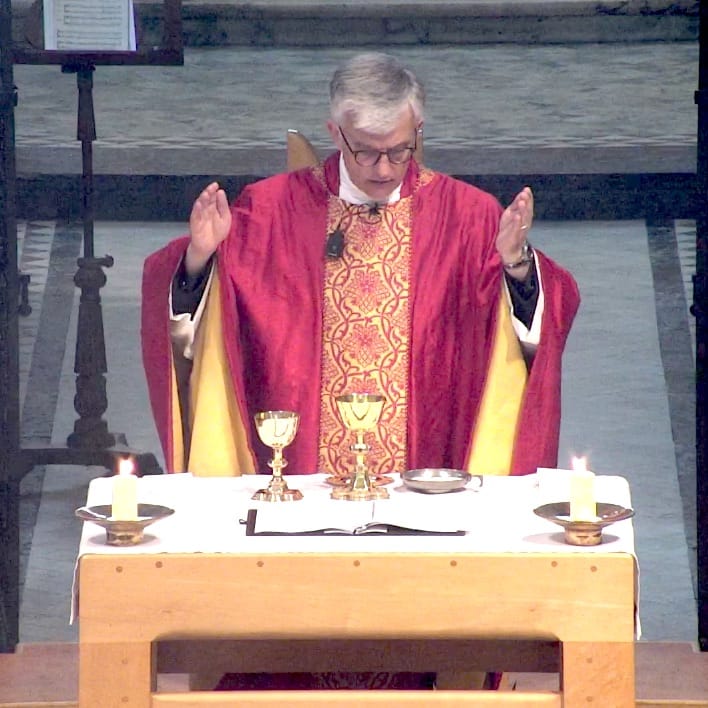
Some of St Matthew's services (most Sunday mornings and some special services) are live-streamed or recorded for those who cannot attend church in person. Under GDPR, the church must gain the consent of anyone whose image may be captured, as this constitutes collection of "personal data". This includes clergy, readers/intercessors, musicians and congregation.
Whilst every attempt is made not to capture the faces of members of the congregation, this may occasionally happen if people turn around or move around the church during the service. The exception is communion, when the congregation is not filmed. The side aisles and back of the nave are so far as possible film-free areas not covered by the camera. Anyone whose personal data is collected must give their consent. Consent forms are available in church and online . The full policy can be read on our parish website or on the noticeboards in church.
Please read Our Privacy Policy - Filming & Photography and if you are happy to, give your consent by downloading, printing, signing, and handing in the form to a church representative or the Parish Office on your next visit. The consent form can be found at the bottom of the page.
Information Quick Links



Join our Mailing List
To receive our email newsletter regarding the latest news and upcoming events at St Matthew's, kindly provide us with your name and email address below. By opting in and subscribing, you'll stay informed about our community, special services, insightful articles, and other valuable content.
Connect with us
Please show your support by following and subscribing to our church and choir social media channels, where you can find inspiring content, updates on our events and services, live streamed services, and uplifting messages.
Church Contact & Social Media


Choir Contact & Social Media


 PCC Login
 Search





Registered Office: 27A The Drive, Kingsley, Northampton, Northamptonshire, NN1 4RY
Charity Registration No.: 1130083.
© Copyright 2012 - 2026, St Matthew's Church Northampton, All Rights Reserved.
Website designed and maintained by Visual Interactive
